
VPN Protocols Explained: WireGuard, OpenVPN, and Others

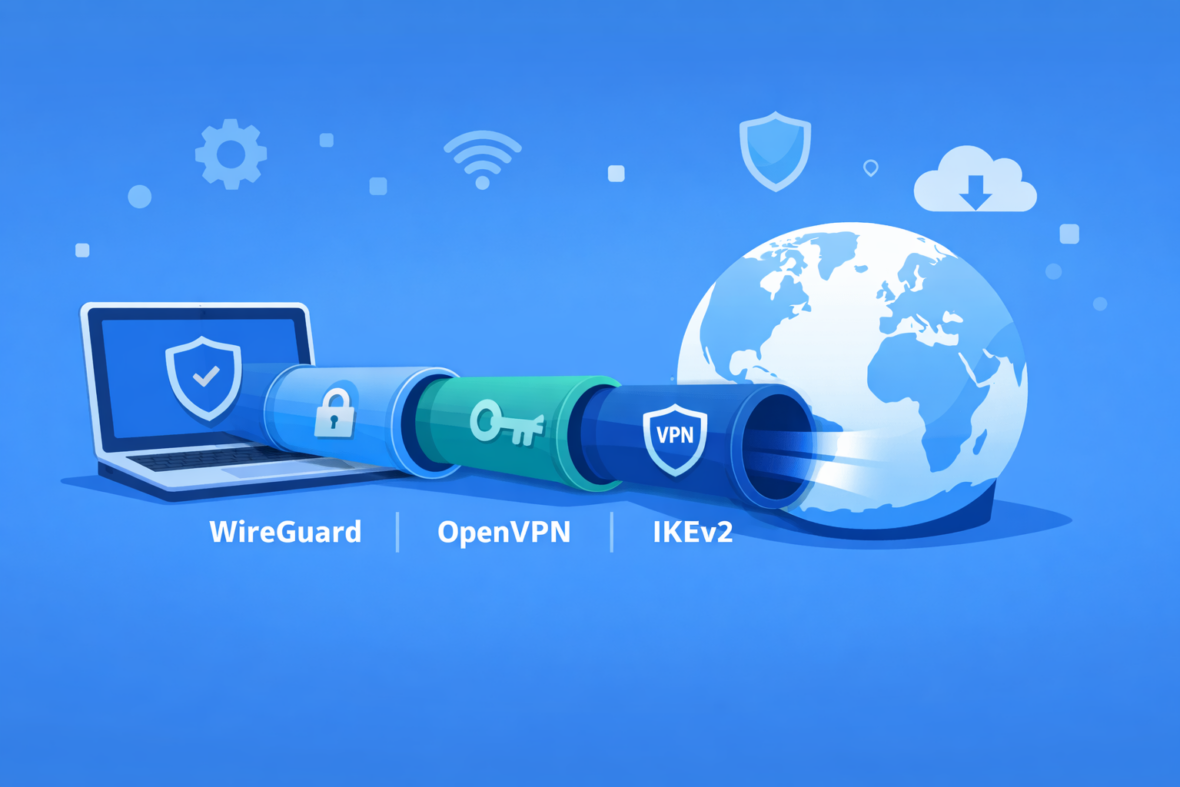
VPN protocols are a core part of how a VPN connection works, yet they are often mentioned without much explanation. Each protocol defines how data is encrypted, transmitted, and secured between a device and a VPN server. Understanding these differences can help clarify why VPN performance, stability, and security can vary between services and devices.
What Is a VPN Protocol?
A VPN protocol is a set of rules that determines how your device connects to a VPN server and how data is protected during that connection. It governs how information is encrypted, how authentication is handled, and how data packets are transmitted across the network.
Different VPN protocols exist because network conditions, devices, and security requirements are not the same in every situation. Some protocols prioritize speed and simplicity, while others focus more on compatibility or configurability. The protocol in use can influence how a VPN behaves in real-world scenarios.
🤓 Did you know?
Early VPN protocols were originally designed for corporate networks, long before consumer VPN apps became common.
Why VPN Protocols Matter
The VPN protocol plays a major role in how a VPN connection performs and how reliable it feels during everyday use. Even when two VPN services advertise similar features, differences in protocol choice and implementation can lead to noticeably different experiences.
| Security impact | Determines how data is encrypted and how resistant the connection may be to interception. |
|---|---|
| Performance impact | Affects connection speed and latency, which can vary depending on network conditions. |
| Stability impact | Influences how well a connection handles network changes or temporary disruptions. |
| Compatibility | Defines which devices, operating systems, and networks are supported. |
How Protocols Affect Security, Speed, and Stability
VPN protocols involve trade-offs. Improving one aspect of a connection can sometimes introduce limitations in another. Understanding these trade-offs helps explain why no single protocol is ideal for every situation.
- Security Encryption methods and key handling influence how data is protected in transit.
- Speed Lightweight protocols may offer better performance, while heavier ones can introduce overhead.
- Stability Some protocols reconnect more smoothly when switching networks or waking from sleep.
- Compatibility Support can differ across devices, routers, and operating systems.
WireGuard: Design Principles and Key Characteristics
WireGuard is a modern VPN protocol designed with simplicity and efficiency in mind. It uses a relatively small codebase compared to older protocols, which can make it easier to audit and maintain.
Many VPN providers have adopted WireGuard due to its streamlined design and reported performance benefits. However, the way WireGuard is implemented can differ between providers, which means results are not always identical across services.
❗ Implementation matters
While WireGuard defines the protocol itself, how user data is handled alongside it depends on the provider’s setup and privacy practices.
OpenVPN: Flexibility and Long-Term Use
OpenVPN is one of the most established VPN protocols and has been widely used for many years. Its open-source nature and high level of configurability have contributed to its long-standing adoption across different platforms.
| Broad support across desktop, mobile, and router environments | |
| Highly configurable for different security and network requirements | |
| Extensive documentation and community knowledge | |
| Often used as a reliable fallback when newer protocols are unavailable |
Other VPN Protocols You May Encounter
In addition to WireGuard and OpenVPN, some VPN services offer alternative protocols. These options are often used for specific scenarios rather than as general-purpose defaults.
- IKEv2/IPsec Commonly used on mobile devices due to its ability to reconnect quickly when switching networks.
- L2TP/IPsec An older combination that provides encryption but may be slower and less flexible.
- Legacy protocols Older options that may still exist for compatibility reasons but are generally not recommended today.
Protocol Security and Transparency
Protocol security is influenced not only by design but also by how openly a protocol is reviewed and maintained. Open-source protocols allow independent researchers to examine the code, while closed implementations can be harder to evaluate.
| Open-source review | Allows public inspection, though review depth can vary. |
|---|---|
| Independent audits | May be conducted, but scope and frequency differ. |
| Provider implementation | Can introduce differences even when using the same protocol. |
There Is No “Best” VPN Protocol
Despite frequent comparisons, there is no universally best VPN protocol. The most suitable option depends on factors such as device type, network environment, and individual priorities.
| Mobile users may prioritize fast reconnection | |
| Travelers may need compatibility with restrictive networks | |
| Home users may focus on stable, long-term connections | |
| Older devices may require broader protocol support |
How VPN Providers Choose and Implement Protocols
VPN providers decide which protocols to offer based on factors such as performance targets, platform support, and maintenance complexity. Even when using standard protocols, default settings and custom modifications can differ.
As a result, two VPN services using the same protocol may behave differently in practice. This is why protocol names alone do not fully describe the user experience.
Frequently Asked Questions About VPN Protocols
-
Can I choose which VPN protocol to use?
Many VPN apps allow manual protocol selection, but availability depends on the provider and device.
-
Is WireGuard always faster than OpenVPN?
WireGuard is often reported to perform well, but speed can vary depending on implementation, server location, and network conditions.
-
Are older VPN protocols unsafe?
Some legacy protocols have known weaknesses, while others remain usable in limited scenarios. Security depends on current best practices and configuration.
-
Do all devices support the same VPN protocols?
Support varies by operating system, device type, and VPN provider, and not all protocols are available everywhere.
-
Does changing protocols affect privacy?
Protocol choice can influence encryption behavior, but overall privacy also depends on the provider’s policies and implementation.
Next Steps
Understanding VPN protocols is a useful starting point, but it is only one factor when evaluating a VPN service. Comparing privacy policies, device support, and real-world performance can provide a more complete picture.
Exploring detailed reviews and setup guides may help clarify how these protocols are used in practice across different providers.