
Is Using a VPN Legal?

The legality of using a VPN is not the same everywhere, and it is often more nuanced than a simple yes-or-no answer. While VPN technology itself is widely available, how it is regulated—and how it may be used—can differ significantly depending on the country, network, and situation.
In most countries, VPN use is legal for legitimate purposes like privacy and security, but some governments actively restrict or control VPN access, and misusing a VPN can make illegal activities illegal in new ways. Understanding the legal landscape where you live or travel is essential, because “it’s legal in my country” doesn’t mean it’s legal everywhere, and “legal” doesn’t mean consequence-free.
This guide explains VPN legality across different regions, the distinction between legal tools and legal uses, and practical considerations before using VPN.
❗ Important disclaimer
This article provides general information only and does not constitute legal advice. Laws and enforcement practices vary by country and may change over time. Consult local legal resources or an attorney for jurisdiction-specific guidance.
VPN Legality by Region: Quick Reference
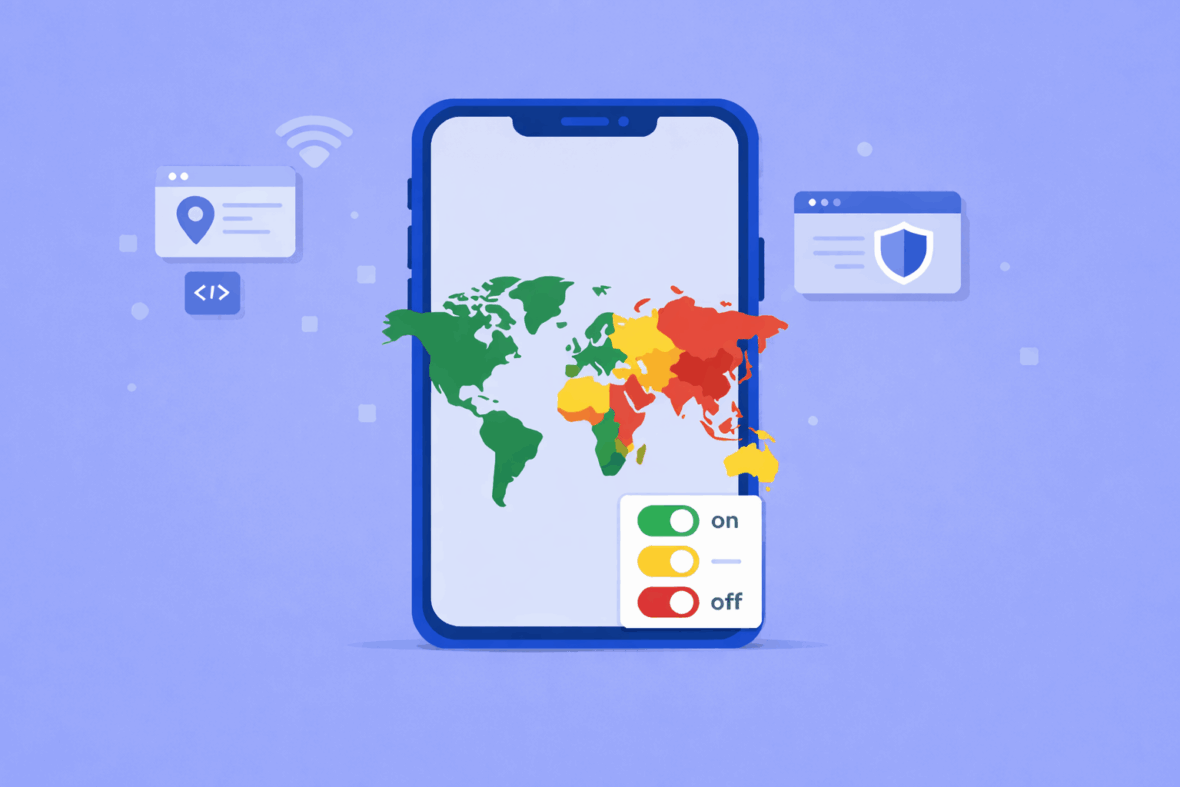
VPN legality varies dramatically by geography. Here’s where VPN use is widely permitted, restricted, or somewhere in between.
This status changes frequently. VPN laws evolve rapidly, and enforcement practices can shift. Before traveling or relocating, check current regulations for your specific destination, as this reference is a snapshot, not legal guidance.
VPN Legality vs. VPN Use: An Important Distinction
One of the most common sources of confusion around VPNs is the difference between whether VPN technology is legal and whether certain uses of a VPN are permitted. In many places, VPN software itself is lawful, widely sold, and used by individuals and organizations.
However, legality often depends on how a VPN is used rather than the tool itself. Activities that are illegal without a VPN usually remain illegal when a VPN is involved, and some governments regulate VPN usage more strictly than others.
| VPN is legal | You can download and install VPN software legally in most countries. |
|---|---|
| But VPN use depends on purpose | Using VPN for privacy on public Wi-Fi is legal; using VPN to commit fraud is not. |
| Legality ≠ consequence-free | Even where VPN is legal, some uses (bypassing geo-restrictions, circumventing corporate policies) may have contractual or policy consequences. |
How Governments Typically Regulate VPNs
Governments that regulate VPN usage tend to follow a small number of recurring approaches. These measures usually focus on oversight, compliance, or control rather than banning VPN technology outright (though some do ban it entirely).
- Registration or licensing: Some countries require VPN providers to register with authorities or comply with specific regulations.
- Blocking of providers: Access to certain VPN websites or servers may be restricted at the network level.
- Limits on commercial VPNs: Business-oriented VPN services may be regulated differently from private or internal networks.
- Compliance requirements: Providers may be expected to follow local data or monitoring rules, depending on jurisdiction.
- Outright bans: Some countries actively ban VPN use entirely or restrict it to government-approved providers only.
VPN Use in Countries With Broad Internet Freedom
In countries with relatively open internet environments, VPN use is generally permitted and commonly associated with privacy, security, and remote access needs. Individuals often use VPNs to protect connections on public Wi-Fi, work remotely, or reduce exposure of their home IP address.
Even in these regions, legality can still depend on usage. Laws governing copyright, fraud, or online harm typically apply regardless of whether a VPN is involved.
Typical legal uses in open networks include personal privacy and security on shared networks, remote work and access to internal systems, and general network protection while traveling. In these countries, VPN is treated as a standard security tool rather than a suspicious activity.
VPN Restrictions in Controlled or Censored Networks
In countries with more tightly controlled internet access, VPN usage may be restricted, regulated, or actively discouraged. Measures can include blocking known VPN services, limiting approved providers, or monitoring traffic patterns that suggest VPN use.
Enforcement practices and legal consequences can vary widely. In some cases, laws may be written broadly while applied inconsistently, making it difficult for users to determine what is permitted in practice. A person using VPN today might face no consequences; tomorrow they might face fines or legal action for the same activity.
| Network type | VPN status | Practical reality |
|---|---|---|
| Open networks | VPN use generally permitted | Used openly for privacy/security |
| Partially restricted | Some VPN services blocked | Some VPNs work; enforcement inconsistent |
| Highly controlled | VPN use restricted/banned | Risky; detection and consequences possible |
The Gray Areas: When VPN Legality Is Unclear
Many situations involving VPN exist in legal gray areas where the legality is genuinely unclear, even to legal experts. These ambiguities create real risks for users.
Common gray area situations: Using VPN to bypass geo-blocking (legal tool, unclear legality for this use), accessing content restricted in your region (may violate local laws, website terms, or both), circumventing corporate or school network policies (violates policy, may or may not violate law), and using VPN to hide from government surveillance in restrictive countries (may be legal, may be treated as suspicious). In each case, the line between legal and illegal is unclear.
| Geo-blocking circumvention | VPN is legal; bypassing geo-blocking exists in a legal gray area depending on the content and your jurisdiction. |
|---|---|
| Streaming content access | Using VPN to access Netflix in another region violates Netflix terms of service, but the legality under local law is unclear. |
| Network policy violation | Using VPN on corporate networks usually violates policy; may or may not violate criminal law. |
| Government surveillance evasion | In some countries, this is legal; in others, it’s treated as suspicious or illegal. |
When you’re in a gray area, understand that you’re accepting some level of risk—whether policy violation, account suspension, or legal consequences. Don’t assume “the law isn’t clear” means “it’s safe.”
💡 Gray areas = real risks
Legal ambiguity doesn’t mean consequence-free. Companies enforce policies strictly; governments can interpret vague laws broadly. Just because something’s unclear legally doesn’t mean you won’t face consequences.
VPNs and Local Laws: Activities vs. Tools
A VPN is a tool that changes how a connection is routed and encrypted, but it does not alter the legality of online actions. Whether an activity is lawful usually depends on local regulations, not on whether a VPN is used.
| Using a VPN for privacy or network security is often permitted | Legitimate purposes in most countries. |
|---|---|
| Violating local laws remains unlawful with or without a VPN | Fraud, harassment, piracy, or terrorism are illegal regardless of VPN use. |
| Terms of service for websites or platforms still apply | Netflix’s ban on VPN use is a contractual rule, not a legal bar, but they can still ban your account. |
| VPN doesn’t exempt you from local laws | Just because you used VPN doesn’t mean a crime isn’t a crime or a violation isn’t a violation. |
Workplace, School, and Network-Level Restrictions
Beyond national laws, VPN use may also be restricted by private network policies. Employers, schools, and administrators of shared networks often set their own rules regarding VPN connections.
These restrictions are contractual or policy-based rather than legal, but violating them can still result in consequences such as loss of access, termination of employment, or disciplinary action.
Your employer may ban VPN on corporate networks even though VPN is legal nationally. Your school may forbid VPN on student networks. Your ISP may deprioritize or block suspected VPN traffic. These are policy enforcements, not criminal law, but they’re real consequences.
| Employer VPN bans | Legal; they can restrict their network however they choose. |
|---|---|
| School restrictions | Common; enforced through network access controls. |
| Public network restrictions | Coffee shops, hotels, airports may block VPN. |
Why VPN Laws Are Often Unclear or Change Over Time
VPN-related laws can be difficult to interpret because they are often tied to broader regulations around internet access, data protection, or national security. Public guidance may be limited or outdated, making compliance difficult even when you’re trying to follow the law.
Enforcement can also vary significantly, with some rules applied strictly and others rarely enforced, depending on the context, region, and political climate.
- Rapid legal changes: VPN regulations evolve faster than public documentation. A law passed last year may already be outdated.
- Broad legal language: Laws may not mention VPNs explicitly, leading to interpretation issues. Regulators apply old laws to new technologies unpredictably.
- Uneven enforcement: Practical consequences can differ from written rules. One person faces no consequences; another faces fines for the same activity.
- Political enforcement: During times of political tension or unrest, enforcement of VPN laws may increase dramatically.
This unpredictability is why “is VPN legal?” is genuinely difficult to answer definitively. The answer is always “it depends on where you are, what you’re doing, and what the enforcement climate is at that moment.”
Important Legal and Practical Considerations Before Using a VPN
Before using a VPN, it is generally advisable to understand the legal and practical context in which it will be used. This includes both national laws and any applicable network policies.
| Check current local regulations | Research VPN legality specific to your country. Government websites, legal blogs, or attorneys specializing in tech law can help. |
|---|---|
| Understand enforcement climate | Even if VPN is technically legal, is it actively enforced? Are people actually facing consequences? |
| Review workplace or school network policies | Check your employer’s or school’s acceptable use policy before using VPN on their networks. |
| Understand the VPN provider’s practices | Know what data they log, which countries they operate in, and their history with legal requests. |
| Clarify your intended use | Are you using VPN for legitimate privacy (legal in most places) or for something in a gray area (potentially risky)? |
💡 When in doubt, ask
If you’re unsure about legality in your specific situation, consult a local attorney or your network administrator. A few minutes of clarification can prevent legal or employment consequences.
Frequently Asked Questions About VPN Legality
-
Are VPNs illegal anywhere?
Yes, in some countries. VPN use is heavily restricted or banned in countries like UAE, Iran, North Korea, and China. VPN legality varies by country, and enforcement practices change frequently.
-
Can using a VPN get you in trouble?
Potentially. Consequences depend on local laws, network policies, how the VPN is used, and enforcement climate. In countries with VPN restrictions, using VPN can result in fines or legal action. Violating workplace policies can result in termination. A VPN does not exempt users from existing regulations.
-
Are VPN laws the same for travelers?
No. Travelers are generally subject to the laws of the country they are in, regardless of their home country’s regulations. If you’re traveling to a country where VPN is restricted, you’re subject to those restrictions, even if VPN is legal in your home country.
-
Can workplaces ban VPN use?
Yes. Organizations may restrict or ban VPN use on their networks based on internal policies rather than national law. Violating workplace VPN bans can result in disciplinary action, loss of access, or termination.
-
Does using a VPN make illegal activity legal?
No. A VPN changes how traffic is routed but does not alter the legality of online activities. Illegal activities remain illegal whether or not a VPN is used. VPN doesn’t exempt you from laws.
-
Is using VPN to bypass geo-blocking legal?
It’s unclear. Using VPN is legal; geo-blocking bypass exists in a gray area. You may violate website terms of service (risking account ban) without necessarily breaking law. Check your jurisdiction’s specific laws.
-
What if I’m traveling to a country with VPN restrictions?
Research the country’s specific VPN laws before traveling. If VPN is restricted, using it carries real risk of fines or legal consequences. Contact your embassy or local legal resources for current information.
-
Should I trust my VPN provider with legal matters?
No. VPN providers are not lawyers. For legal questions about VPN use in your jurisdiction, consult a qualified local attorney, not your VPN provider. They may have business incentives to downplay legal risks.